
Groundwater: The Invisible Lifeline Beneath Our Feet
Groundwater Awareness Week: Why the Water You Don’t See Matters Most
Every year during Groundwater Awareness Week (March 8–14), water professionals try to shine a spotlight on something most people never think about: the water beneath their feet.
Groundwater isn’t invisible. It is undervalued. While it doesn’t always appear in headlines or water management debates, it quietly underpins drinking water supplies, agriculture, ecosystems, and climate resilience.
And here’s the statistic that usually surprises people most:
Groundwater makes up 99% of the world’s available liquid freshwater.
Yes, almost all the usable freshwater on Earth is underground. Yet groundwater remains one of the most overlooked and misunderstood parts of the global water system.
The Invisible Water Crisis
Human activity has pushed the planet into what scientists call ecological overshoot — when we use resources faster than Earth can regenerate them. Groundwater sits right at the center of this crisis.
Around the world:
- Nearly half of the global population faces extreme water stress at least one month per year.
- By 2050, that could rise to 60% of humanity.
- More than 80% of large cities rely primarily on groundwater.
- About half of humanity drinks groundwater from wells and springs.
Groundwater acts like a global savings account for water. During droughts, floods, and climate extremes, it keeps communities, agriculture, and ecosystems alive.
But we’re drawing from this account faster than we replenish it.
Some regions pump groundwater unsustainably, while others lack wells and access entirely. This creates a paradox where some places have too much groundwater use and others have too little groundwater access.
Why Groundwater Is So Easy to Ignore
Groundwater has a visibility problem.
Water management conversations often focus on big, visible solutions like dams and reservoirs. Surprisingly, reservoirs lose enormous amounts of water to evaporation, more than the combined domestic and industrial water use in many regions.
Groundwater storage, by contrast, is nature’s underground reservoir:
- It doesn’t evaporate.
- It sustains rivers, wetlands, and ecosystems.
- It buffers drought and climate variability.
Groundwater isn’t just part of the water cycle — it’s the foundation of the water cycle.
In fact, groundwater discharge sustains most streamflow and wetland ecosystems worldwide.
Without groundwater, many rivers would stop flowing.
Groundwater and Climate Change: The Hidden Connection
We often talk about climate change in terms of temperature and carbon.
But water, especially groundwater, is the missing piece of the climate conversation.
Groundwater influences:
- Soil moisture
- Vegetation and forests
- Evaporation and rainfall patterns
- Droughts, floods, and wildfires
Lowering groundwater levels can even reduce rainfall and accelerate desertification.
Recharging aquifers is increasingly recognized as a powerful climate adaptation strategy. Managed aquifer recharge and rainwater harvesting are helping restore degraded landscapes around the world.
Why Education Is the Biggest Gap
Despite its importance, groundwater is barely taught outside specialized fields. Most environmental programs focus heavily on surface water, treating groundwater as a “black box.”
This knowledge gap has real consequences:
- Too few groundwater experts
- Limited groundwater monitoring and data
- Weak groundwater governance
- Low public awareness of groundwater
In short: we can’t manage what we don’t understand.
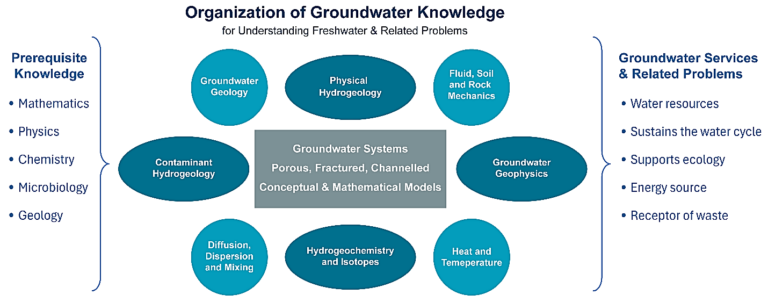
That’s why we here at the Groundwater Project aim to make groundwater knowledge free, accessible, and understandable for everyone, from students and policymakers to well owners and journalists.
Making the Invisible Visible
Groundwater Awareness Week is about shifting how we think about water.
Because when we talk about water security, food security, climate resilience, and ecosystem health, we’re really talking about groundwater.
The water beneath our feet is not a backup plan. It is the foundation of freshwater security. The first step to protecting it is simple: make the invisible visible.